
The Earthwork Bid: From High-Risk Guesswork to Strategic Advantage
The Earthwork Bid: From High-Risk Guesswork to Strategic Advantage
The planning and scheduling of earthwork are of major importance in obtaining an efficient bidding price for multibillion-dollar construction projects. But how much detail is truly required to succeed?
The Foundational Challenge
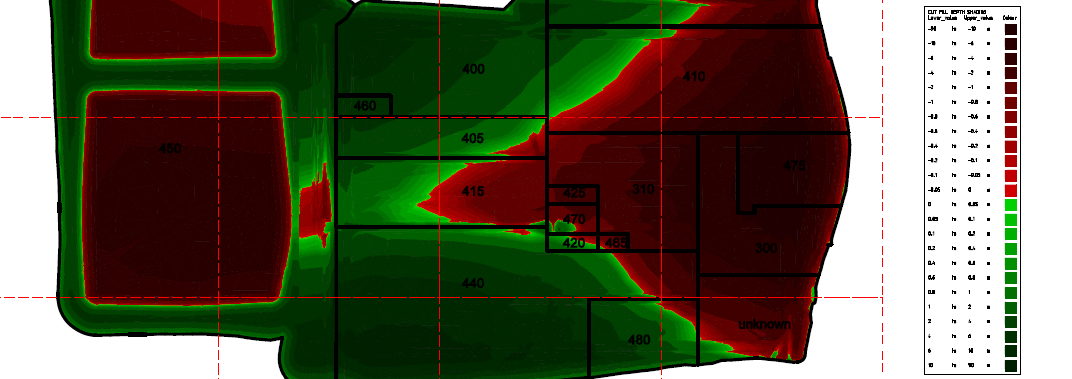
For any major development, be it highways, dams, pipelines, mines, or big land development and leveling, the calculation of earthwork is crucial for an accurate bid. Earthwork computation involves calculating volumes, determining final grades, balancing cuts and fills, and planning the most economical movement of material.
The Strategic Planning Gap
Many contractors use estimation software simply to calculate cut-and-fill quantities. This approach misses the strategic advantage of detailed schedule analysis, leaving critical, high-cost questions unanswered.
9 Critical Questions Your Bid Must Answer:
- How many machines do we really need?
- When do the cut and fill machines start and finish?
- Where will the machines work at all times?
- If material trips are required to be transferred from or to the site, how long will the trip take?
- What about areas staging delivery for fast-track project delivery?
- What are the regulation/security requirements for importing/exporting material?
- Where is the best nearest crushing plant, or do we have to build one on site?
- Do we require double handling?
- Can we confirm the client’s date or not?
Quantitative Scenario Analysis: A Practical Example
To move from theory to practice, let’s quantify two contrasting scenarios. We will analyze the fleet requirements and costs based on a clear set of estimating assumptions.
Estimating Assumptions
| Target Duration | 180 working days (approx. 8 months) |
| Quantities | Total Cut = 970,000 m³; Spoil to Export = 485,000 m³; Required Fill = 500,000 m³; Borrow to Import = 15,000 m³. |
| Equipment Costs (per hour) | Excavator ($500), Dozer ($550), ADT ($380), Grader ($150), Compactor ($140). |
| Plant Cost | On-site crushing plant lease & setup = $350,000. |
| Productivity (per day) | Excavator/Dozer: Normal Soil = 2000 m³, Medium/Hard Rock = 1100 m³. |
| ADT Cycle Times | On-site = 15 min; Off-site = 60 min. |
Fleet Calculation Method: The required number of machines is determined by calculating the total “machine-days” needed to complete a task and dividing it by the available project duration. For example, if cutting requires 684 total machine-days, the fleet needed to finish in 180 days is 684 / 180 = 3.8, which is rounded up to 4 machines.
| Scenario | Required Fleet | Estimated Cost | Key Risks & Considerations |
|---|---|---|---|
| A: On-Site Crushing |
|
~ $14.4 Million | High initial CAPEX for plant setup. Requires significant on-site footprint. Offers maximum control over schedule and quality. |
| B: Off-Site Crushing |
|
~ $19.5 Million | No plant CAPEX, but massive increase in trucking costs. High risk of delays due to traffic, weather, and dependency on a third-party facility. |
Comprehensive Schedule Scenarios for Analysis
An experienced contractor must analyze multiple scenarios to de-risk their bid. Even if the tender doesn’t request an alternative, this analysis is essential to justify pricing, identify opportunities, or make the strategic decision not to bid at all.
- Cut/fill analysis balance with 50% chance for (suitable and not suitable soil).
- Cut/fill analysis balance with no transportation.
- Cut/fill analysis with crushing plant on site.
- Cut/fill analysis with crushing plant off site.
- Cut/fill analysis with transportation to dumping area.
- Cut/fill analysis with transportation from nearest borrow pits.
- Direct hauling from cut to fill areas.
- Double material handling.
- Delivery by areas which would partially restrict the machines movement.
- Earthwork scope delivery considering soil testing, quarantines regulation and security access.
- Earthwork delivery by layers based on material availability.
From Analysis to Advantage: Visualizing the Plan
The output of this analysis is not just a price, but a series of detailed schedules and resource plans that model different approaches. This provides a clear, visual understanding of the time, resources, and quantities required.
Detailed Schedule (Gantt Chart)
| Activity | Quantity (m³) | Duration (Days) | Predecessor | Timeline (180 Days) |
|---|---|---|---|---|
| A. Mobilization & Site Setup | N/A | 15 | – | |
| B. Set Up Crushing Plant | N/A | 20 | A | |
| C. Clearing & Grubbing | N/A | 30 | A | |
| D. Bulk Cut (Normal & Hard Soil) | 970,000 | 150 | C | |
| E. Haul Spoil to Crushing Plant | 485,000 | 150 | B, D (Start-to-Start) | |
| F. Haul Usable Material to Fill Areas | 485,000 | 150 | E | |
| G. Import Borrow Material | 15,000 | 10 | F | |
| H. Final Grading & Compaction | 500,000 | 160 | F (Start-to-Start + 10d) | |
| I. Demobilization | N/A | 10 | H, G |
Cumulative Quantities (S-Curve)
This detailed analysis allows for accurate pricing, reveals opportunities, minimizes risk, and provides a clear strategy for negotiating better cash flow and payment terms. It demonstrates a level of professionalism and risk awareness that sets you apart.
Can You Afford Not To?
For an experienced planner, running these scenarios can be done within a couple of days. The excuse of “no time during bidding” is a symptom of a lack of skills within the proposal team, not a lack of time.
Clients are increasingly realizing the importance of this early-stage planning and are beginning to mandate detailed earthwork and mobilization plans as part of the bid submittal.
After considering all of this, are you still thinking you can submit a competitive and successful bid without doing this detailed schedule analysis?